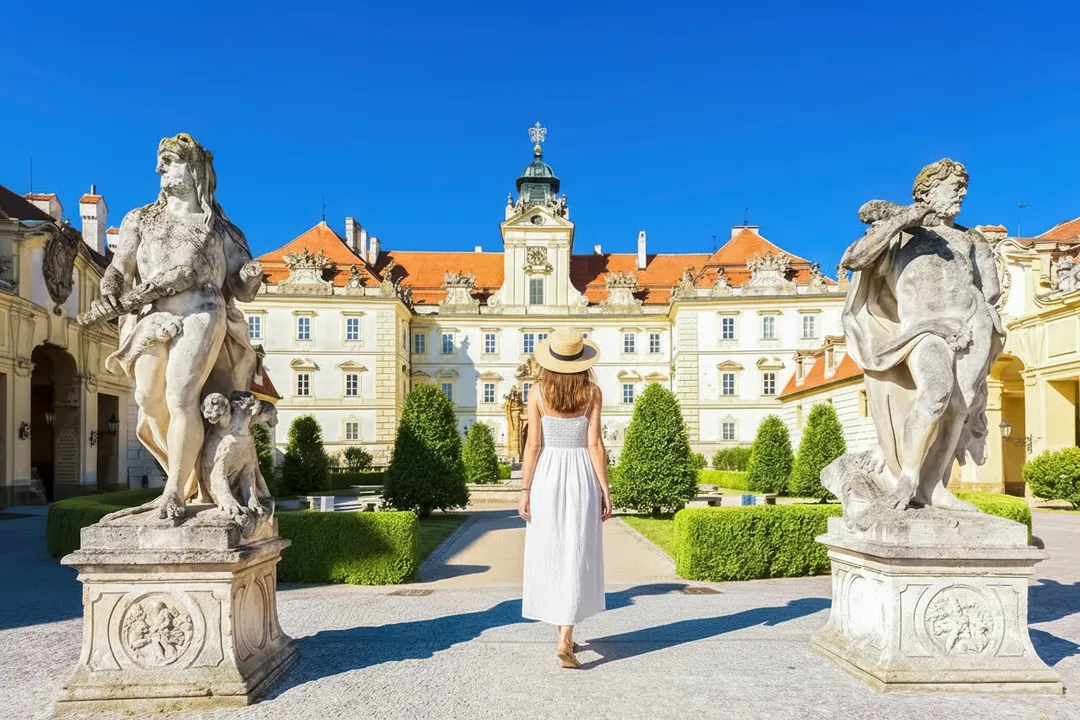
Valtice Castle · Zámek Valtice
The grand
With Stately Baroque chateau, deep wine culture, and a landscape that opens outward into woods, Valtice is the Moravian "Capital of Wine" that balances Baroque opulence with deep historical roots.
Vienna Rivalry
Baroque Splendour
The Valtice Chateau was historically the main residence of the House of Liechtenstein and was designed specifically to rival the imperial splendour of the Viennese court.
As one of the most powerful noble families in the Danube Monarchy, the Liechtensteins used Valtice to demonstrate their immense wealth and status through grandiose Baroque architecture and interiors.
Hidden Gem
Often cited as one of the most beautiful Baroque interiors in the country, the Castle Chapel features an incredible organ and a ceiling fresco that creates an illusion of endless height.
The Baroque Theatre
A rare survival of 18th-century stagecraft, the Baroque Theatre still houses its original wooden machinery for changing scenery and creating sound effects like thunder and wind.
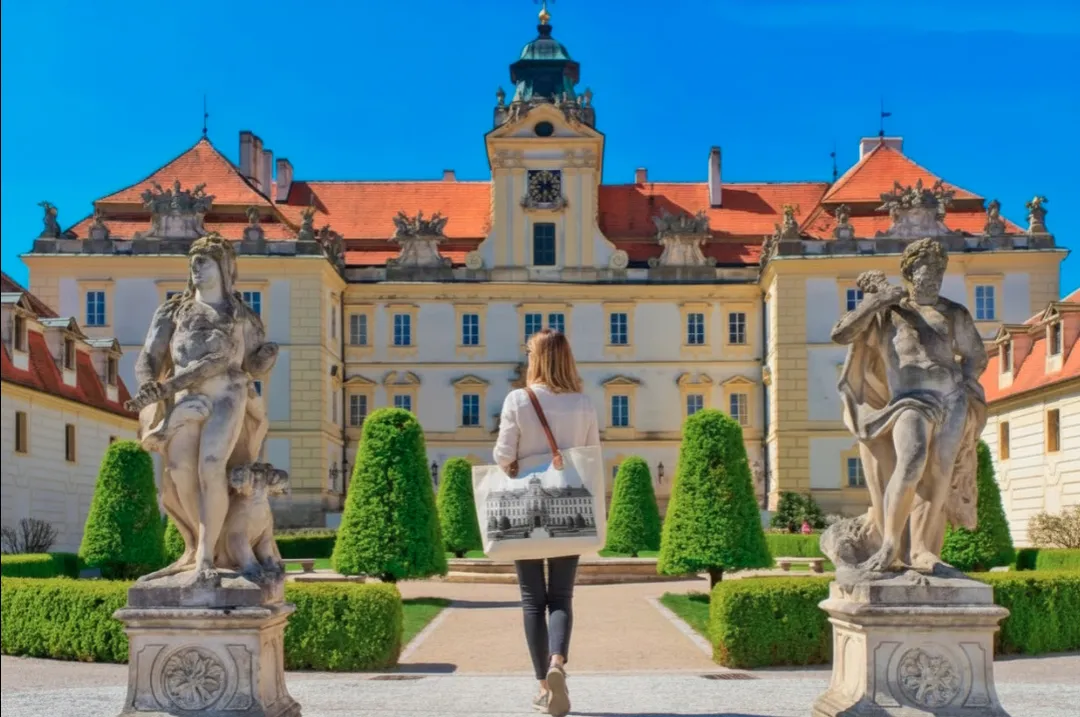
Valtice Core
The Chateau and the cellars
Originally a medieval fortress built in the 12th century to protect the border between the Duchy of Austria and Moravia, Valtice castle underwent a dramatic transformation in the 17th and 18th centuries. Renowned architects like Johann Bernhard Fischer von Erlach and Domenico Martinelli were commissioned to create a four-wing complex surrounding a courtyard, characterized by rhythmic facades and a sense of “theatrical” Baroque symmetry.
Beneath the palace lies the Wine Salon of the Czech Republic. Housed in the extensive vaulted cellars, this national exhibition features the top 100 award-winning wines from across the country. Visitors can opt for “open tastings,” allowing them to sample the finest Moravian Rieslings and Pálavas in an atmosphere that smells of oak and history.
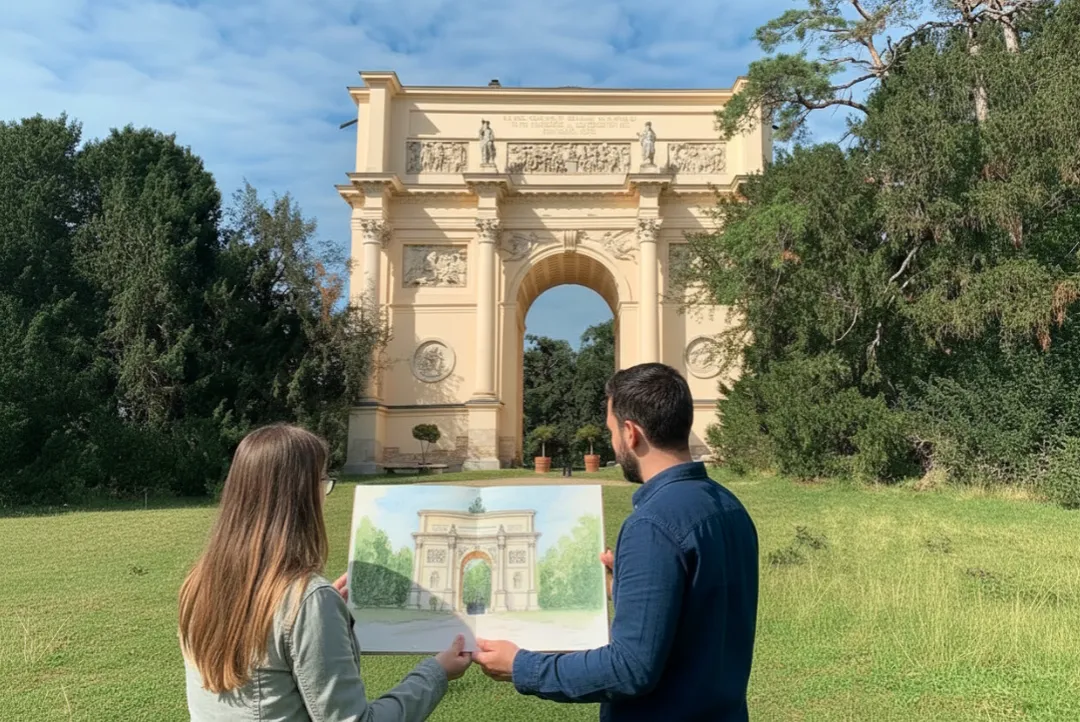
Arc de Triomphe in the woods
The Diana Temple
Inspired by the Arch of Trajan in Benevento, it is massive three-story high arch decorated with Corinthian columns was built between 1810 and 1813 by Josef Hardtmuth and Joseph Kornhaeusel, and intricate reliefs added by sculptor Joseph Klieber depicting the goddess Diana and scenes from Roman mythology.
Designed to resemble a triumphal arch, it served as a gathering point for the Liechtenstein nobility before their hunts. Today guided tours grant access to the former forester’s apartment and a richly decorated main social hall.
Horizon Line
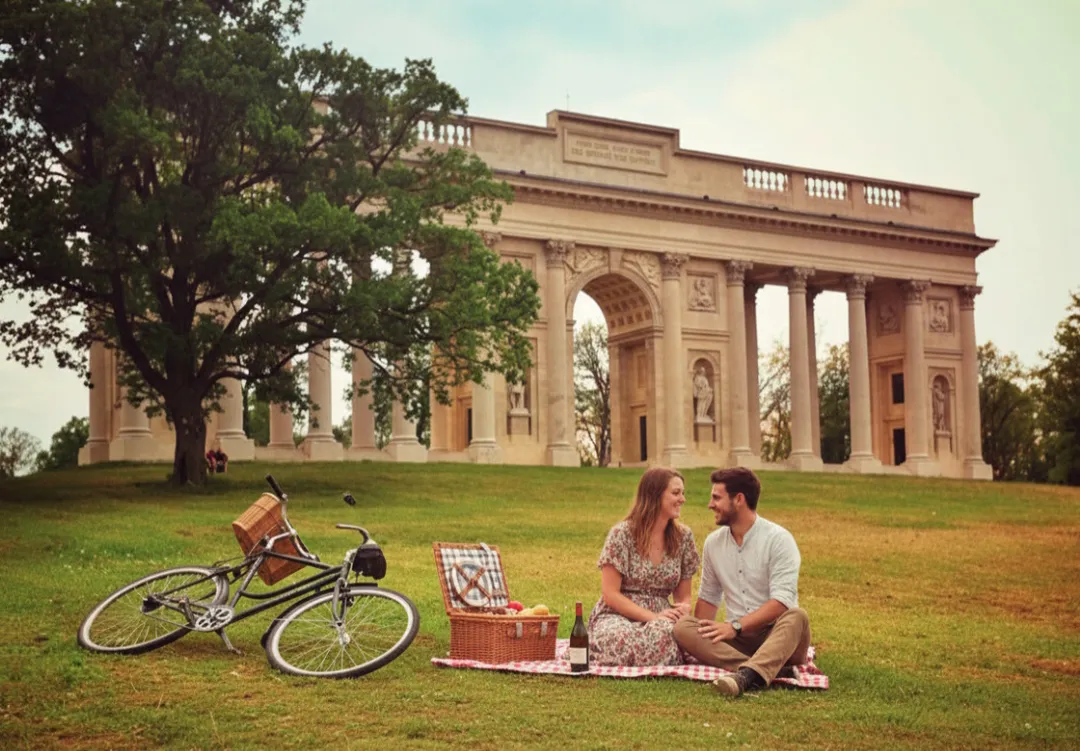
Reistna Colonnade
The Colonnade on Reistna is the crowning jewel of the Lednice-Valtice horizon. Built between 1810 and 1817 by Joseph Hardtmuth (and finished by Joseph Kornhaeusel) it features 24 Corinthian columns and statues representing Virtues.
On a clear day the roof terrace (accessible via a small staircase inside) provides views of the towers of Valtice and Lednice, the Palava Hills, the rolling hills of the Weinviertel region and distant peaks of the Little Carpathians. This is the absolute best spot in the entire UNESCO site for sunset photography. The white limestone glows orange as the sun dips behind the Palava mountains.
Extend The Visit
Follow the links between architecture, wine, and people
Valtice opens naturally into the Hardtmuth and Bauer stories, and it pairs well with Lednice for a fuller view of how the Liechtenstein landscape was staged.