Lednice Castle · Zámek Lednice
The romantic
As the fairy-tale gateway to a UNESCO landscape, Lednice enchants with its Neo-Gothic chateau, historic Palm House, ornamental gardens and parkland follies.
From icebox to hotspot
The coolest destination
The name Lednice (first mentioned in 1222) is derived from the Czech word “ice” ( led ), likely referring to the freezing waters of the Dyje River, with historic German version “Eisgrub” literally meaning “ice hole” or “ice pit”. The irony is that over the centuries, the ‘Icebox’ of Lednice has grown into a premier global travel hotspot.
The Great Moravian Empire
In the 9th century the area was a thriving Great Moravian power centre. Excavations at nearby Pohansko have revealed a princely court, a Christian church and a rich burial ground.
Moravian Stronghold
In the early 13th century, before it was a palace, Lednice was a Gothic stronghold held by the Sirotci family to protect the river.
Neo-Gothic Reimagining
Lednice Chateau
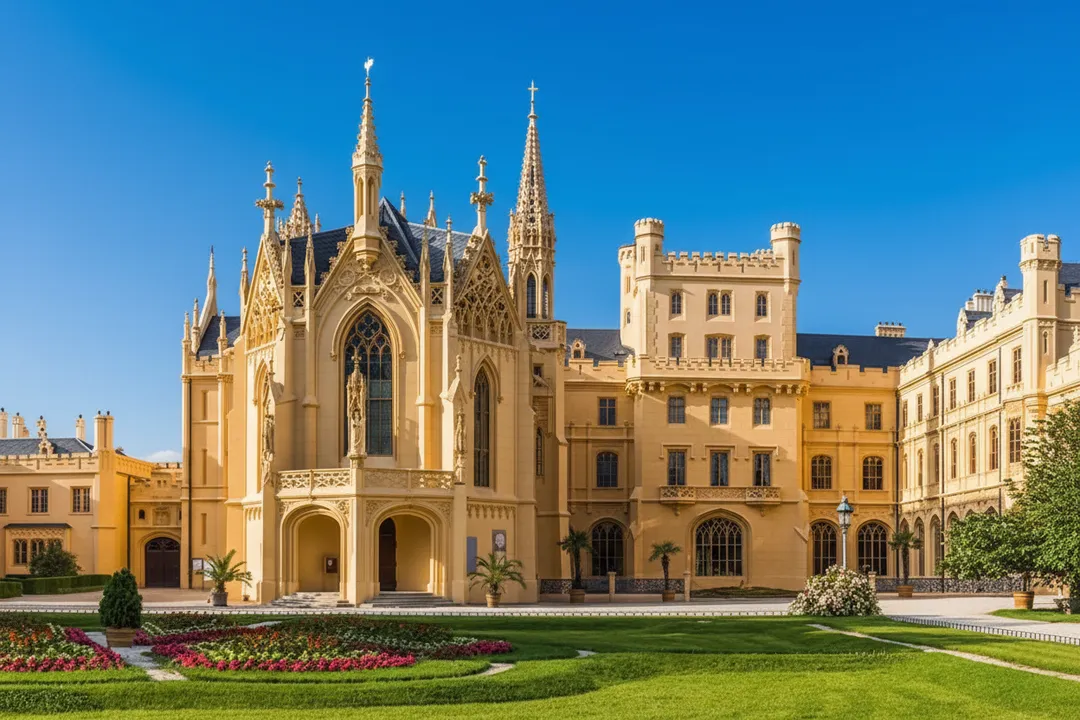
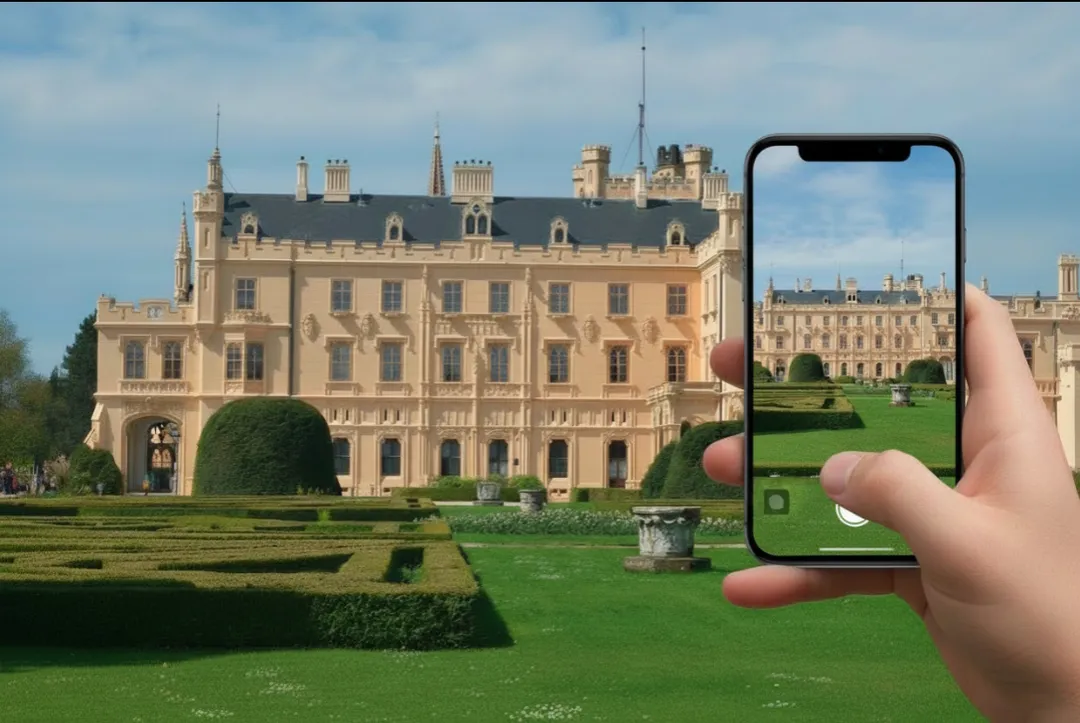
The original fortress in Lednice was replaced by Renaissance chateau in the 16th century, followed by Baroque reconstructions. Between 1846 and 1858 Prince Alois II von Liechtenstein commissioned a final transformation, led by Jiří Wingelmüller, creating the fairy-tale facade seen today.
British historian David Lawson Jacques PhD OBE suggests a compelling artistic parallel between the architecture of Lednice Chateau and William Turner’s depictions of Belvoir Castle, which Alois II almost certainly would have encountered during his travels.
The Lednice Castle interiors are famous for the intricate coffered wood ceilings and turquoise or red colour schemes. One of the most celebrated features is a spiral staircase in the library, carved from a single piece of oak without the use of nails.
Chateau Greenhouse
Palm House
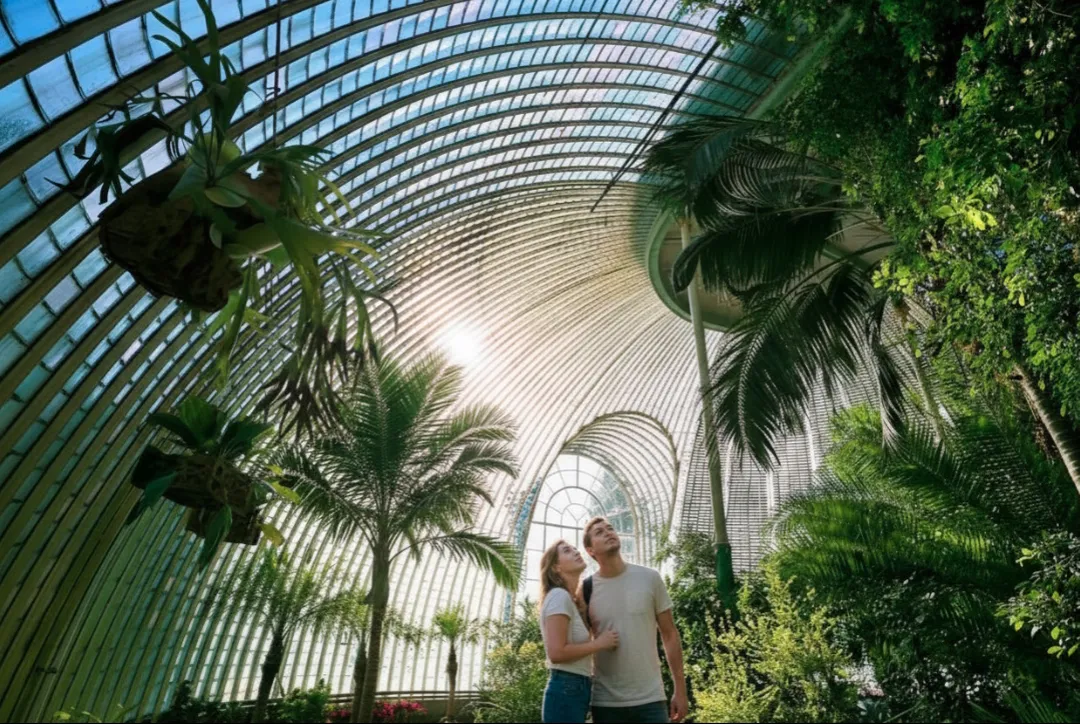
The 92-meter-long greenhouse features self-supporting cast-iron columns shaped like bamboo stalks with decorative leaf sheaths. It houses approximately 250 species of tropical and subtropical plants. The greenhouse’s most famous inhabitant is an Encephalartos altensteinii, a palm-like cycad estimated to be between 300 and 400 years old, making it the oldest cycad in the Czech Republic.
Depicting some of those plants at Lednice Palm House helped the world-famous Bauer brothers achieve excellency in botanical illustration.
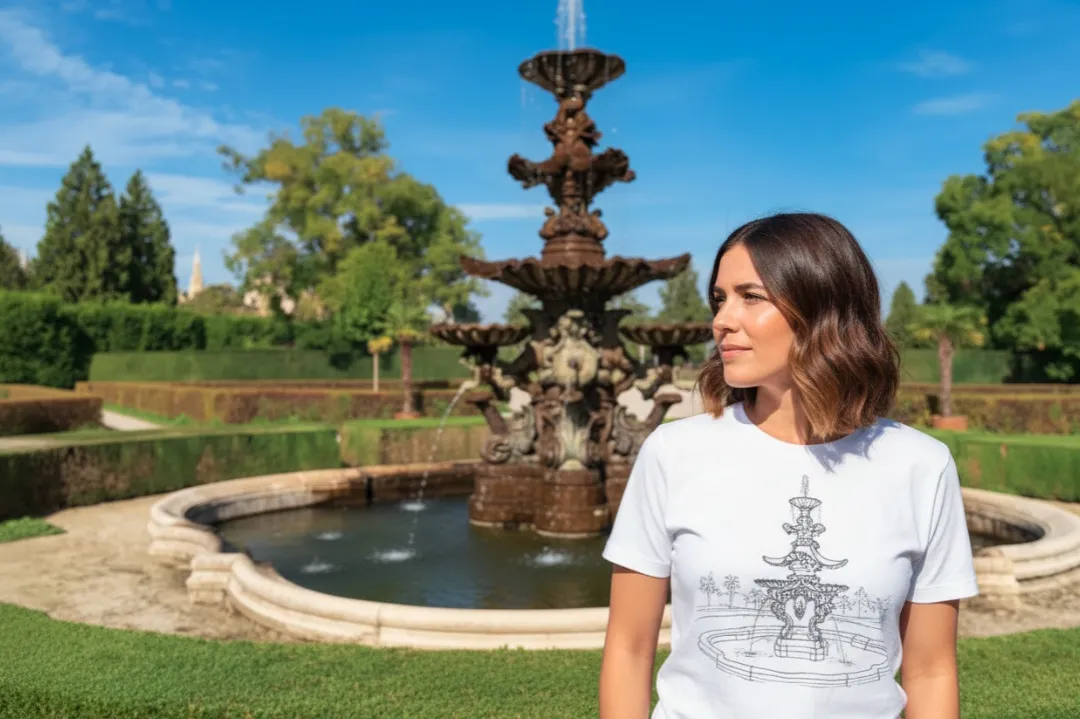
French garden
Venetian Fountain
Set on the terrace directly overlooking the formal French parterre, the fountain was probably built according to a design by Giovanni Giacomo Tencalla around 1635 by the Liechtenstein stonemason Pietro Maderno. Its’ model is kept in the art collections of Prague Castle.
The intricate details feature aquatic motifs, acanthus leaves, and mythical figures, making this Mannerist fountain one of the most elegant and photogenic features of the Lednice Chateau gardens.
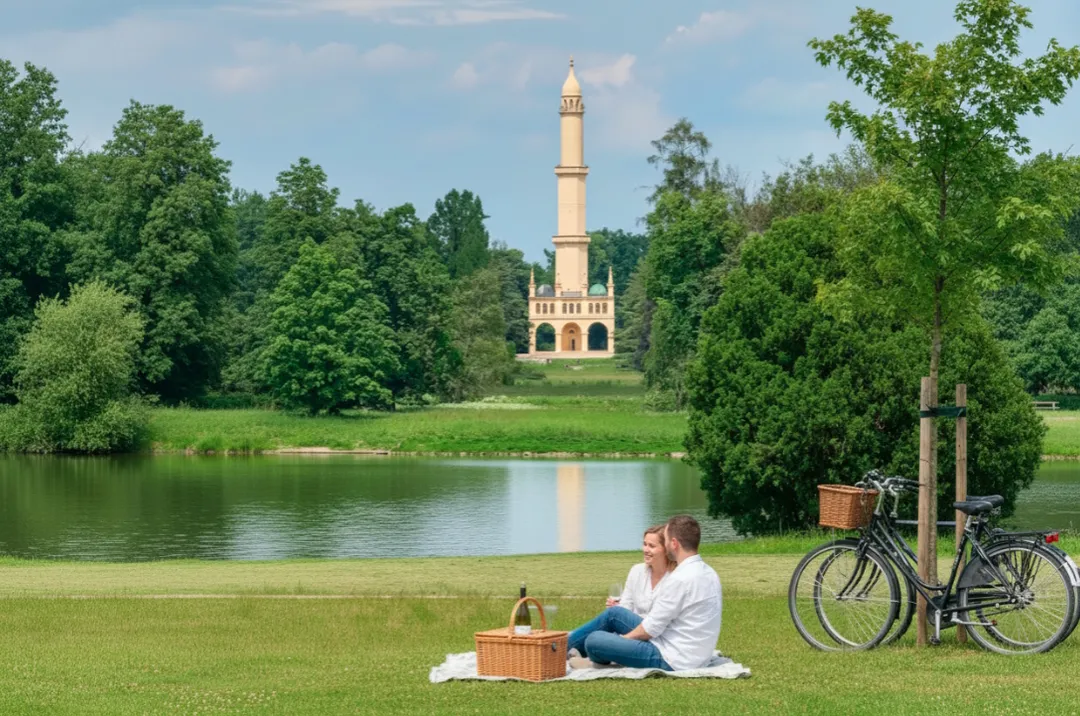
Hardtmuth Icon
Minaret
A striking 60-meter-tall lookout tower is the tallest minaret outside the Islamic world. It is also the oldest preserved lookout tower in the Czech Republic and the only minaret in the country.
Historically, it was met with significant resistance from the local population and the Church. To appease them and bypass religious restrictions, Liechtensteins officially designated the building as a lookout tower and gallery.
Designed by Joseph Hardtmuth, the Minaret is a masterpiece of Moorish Revival architecture. Frustrated, while sketching, by the expensive and messy graphite sticks imported from England, Hardtmuth created the modern pencil we know as Koh-I-Noor Hardtmuth.
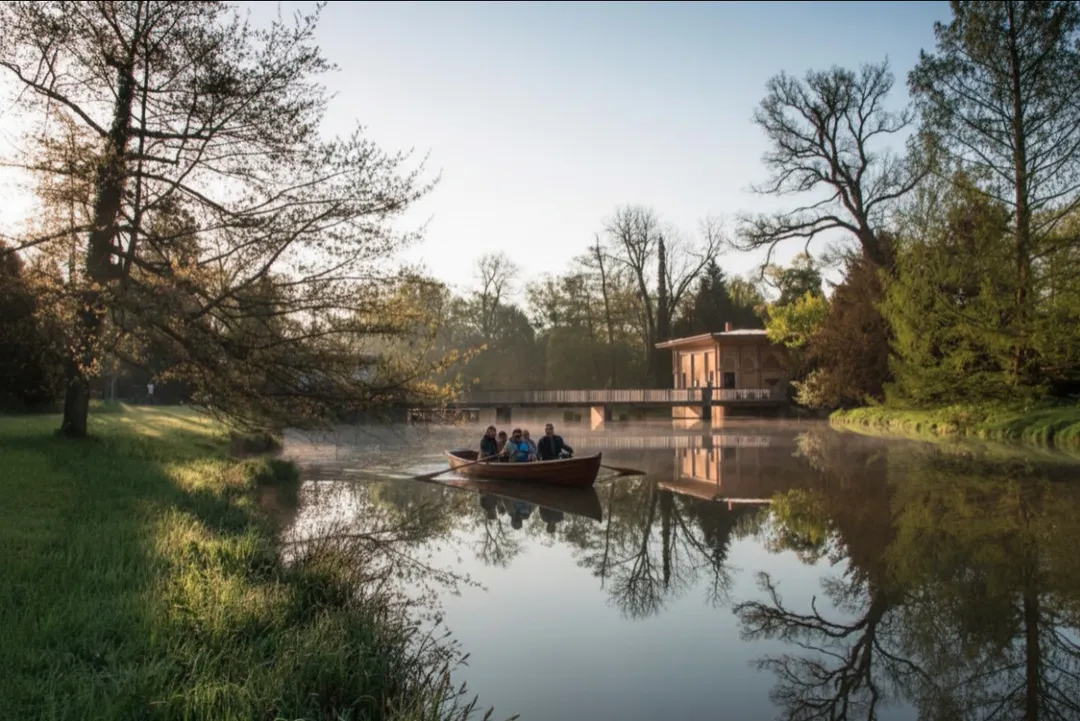
Industrial Beauty
Moorish Waterworks
The Moorish Waterworks is a functional historical landmark still housing one of the oldest preserved hydroelectric turbine systems in the region, which once provided electricity to the castle and village.
Originally built in the mid-17th century to manage the garden’s water system, it was reconstructed in its current Moorish Revival style in 1836 by architect Jiří Wingelmüller, to disguise the building’s industrial purpose.
The Moorish Waterworks also serves as primary starting point for scenic boat trips.
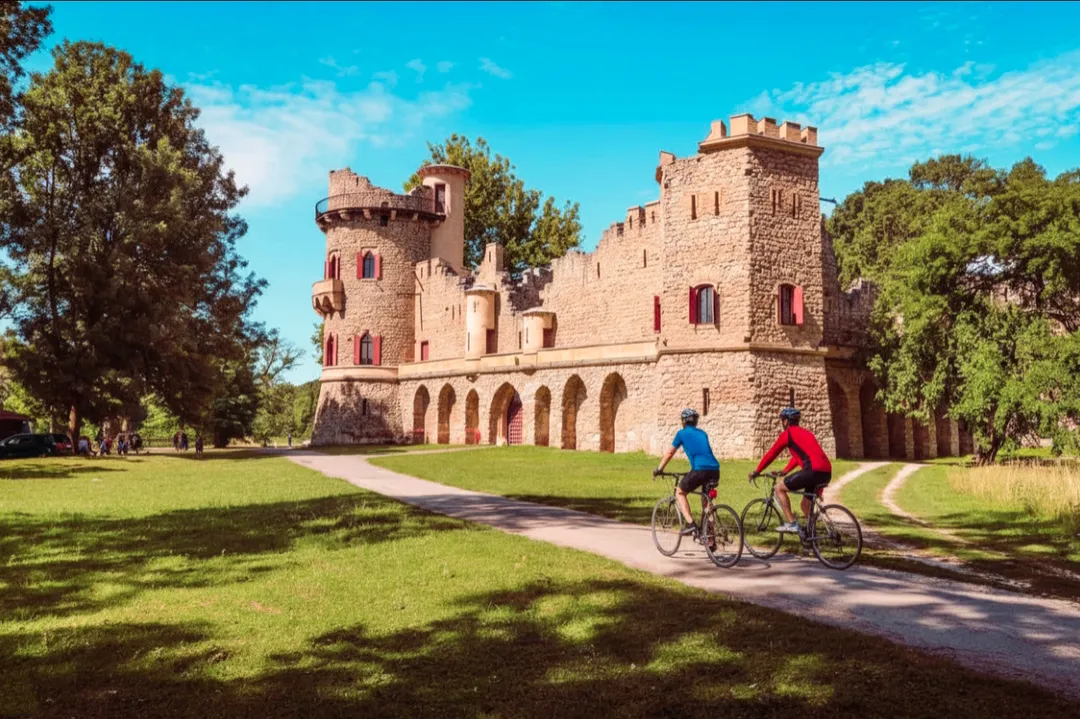
Living Ruin
John's Castle
Located in a meander of the Dyje River about 4 km east of Lednice Chateau is John’s Castle, a “living ruin” designed by Joseph Hardtmuth in 1801 to be inhabitable. It served as a functional hunting lodge where the Liechtenstein nobility gathered for grand feasts following their hunts.
While this is a 19th-century “fake” ruin, it was built using stones and architectural principles that mimic the actual ruins of the 13th-century forts that once guarded the local river crossings.
Continue The Route
Move from Lednice into the bigger story
Lednice connects directly to the engineering story behind Joseph Hardtmuth, the botanical story of the Bauer brothers, and the wider destination network across Valtice and Mikulov.